

This time of the Christian year, Jesus’ story fast forwards to his first miracle, performed at the wedding at Cana. It’s one of the few Bible stories, along with Noah and the Ten Commandments, that everyone knows, whether or not they have ever read a Bible.
The miracle story is found in the Gospel of John. Scholars today refer to John as “The Fourth Gospel” to better reflect its anonymous authorship and distinct character from the synoptic gospels of Mark, Matthew, and Luke (also anonymously authored).
The Fourth Gospel was written at least 60 years after Jesus’ death. It was probably written for a Jewish community in excruciating emotional and existential pain because their love for Jesus got them exiled from their synagogue, which meant their families were torn apart, and the community of John was living in diaspora, alone.
John 2:1–11 (CEB): On the third day there was a wedding in Cana of Galilee. Jesus’ mother was there, and Jesus and his disciples were also invited to the celebration. When the wine ran out, Jesus’ mother said to him, “They don’t have any wine.” Jesus replied, “Woman, what does that have to do with me? My time hasn’t come yet.”
His mother told the servants, “Do whatever he tells you.” Nearby were six stone water jars used for the Jewish cleansing ritual, each able to hold about twenty or thirty gallons. Jesus said to the servants, “Fill the jars with water,” and they filled them to the brim.
Then he told them, “Now draw some from them and take it to the headwaiter,” and they did. The headwaiter tasted the water that had become wine. He didn’t know where it came from, though the servants who had drawn the water knew. The headwaiter called the groom and said, “Everyone serves the good wine first. They bring out the second-rate wine only when the guests are drinking freely. You kept the good wine until now.” This was the first miraculous sign that Jesus did in Cana of Galilee. He revealed his glory, and his disciples believed in him.
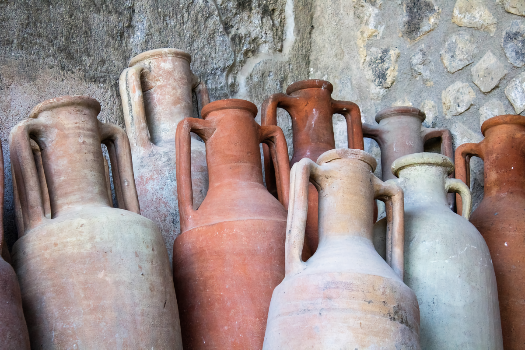
Notice that the jars Jesus uses were “used for the Jewish cleansing ritual,” which means the vessel and water are already holy. Jesus isn’t transforming something worthless into something of worth. Jesus, in the opinion of the gospel’s author, sees humanity (the vessels) as worthy but falling short of our potential — a potential Jesus has realized and believes he can teach to the rest of us.
The Fourth Gospel amalgamates a confluence of several early streams of Christian consciousness, including a healthy dose of Gnosticism. For 200 years, many dozens of Jesus communities did their own thing, telling their often unique Jesus stories and developing their own rituals, as did “John’s” community.
Remember, everything anyone knew about Jesus in the first 100 years after his death was shared by word of mouth. Each congregation had access to different oral traditions. And in the case of The Fourth Gospel), the community itself likely wrote much, if not all, of it. Nothing about Jesus’ life was written until, at best, 30 years after the crucifixion. Paul’s letters are in circulation earlier, but Paul writes about Paul’s experiences with the resurrected Jesus, not as a biographer. And Paul is not at all concerned about Jesus’ early ministry.
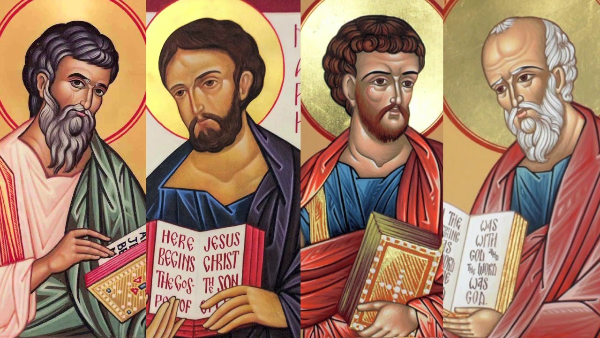
Consequently, some Jesus groups heard and told Mark and Paul primarily. In contrast, others had only access to Luke and letters to and from teachers who have since been lost to the shifting Middle Eastern political sands — and, at least in part, to Paul’s insistence that anyone who disagreed with him be ignored and their work destroyed.
The Gnostic sects are a vibrant and integral part of the story, an evident influence on the Fourth Gospel’s message of God’s personal and incarnate transformative presence. Gnostic communities were reading not only the synoptic gospels (Mark, Mathew, and Luke) but also the gospels of Thomas, Mary, James, and a host of other essential works primarily about Jesus’ spiritual nature and message.
While the developing Roman Orthodoxy took issue with the Gnostics, in The Fourth Gospel, both groups saw a brilliant work written by someone (or a few someones) who, like Mark, had likely interviewed one of Jesus’ intimate followers — “the beloved disciple,” the Gospel names them.

We can guess all day who “the beloved disciple” is. Perhaps it was even a member of John’s community, but it doesn’t matter. The point not only of the wedding at Cana but of the entire Fourth Gospel is not the guest list but that God is incarnate, abundant, and transformative.
Right now, within the vessel you already possess.
God is incarnate, abundant, and transformative.
Right now, within the vessel you already possess.
For the Gnostics, the miracle at Cana reveals God’s universal abundance and the ability of every person to experience “the real world” hidden just beneath this world’s sensory illusions. It’s a world the Gnostics believed Jesus was here to teach us how to access. It is the world of the prime source of Oneness, where we know that all that exists is a singular, all-encompassing, ever-loving, expanding, creating presence, which is just as quickly turned into water as wine, as you and I.
The idea of “turning water into wine” has become part of the secular consciousness, unfortunately focused on transformation rather than the fact there is no wine without water. Water to nourish the seed, then water to flow through the vine and form a grape, filling it with juicy goodness that can be turned into wine. Water turns into wine quite naturally.
Which might be the point the author of the parable is making: As readily as water flows through a grapevine and into a grape, so too does God flow through and fill us, nourishing us until we are ripe and ready to burst with conscious awareness of God’s creative abundance. And ours.
Jesus acts in a reality where God is incarnate in everything from a leper to Caesar Augustus to an inanimate clay amphora filled with water because Jesus knows God is the essence of all being. For Jesus, the water is holy. The amphora is sacred. It’s all sanctified, so Jesus sees the fruits of God’s abundance everywhere, and that helps others see it as well.
This parable is meant to help us understand that when we have the faith of Jesus, when we see reality through God’s eyes, we know there is abundance for everyone to have — and to be — enough.
Amen.
Question: How do we create attitudes of abundance?