
My family moved around a lot when I was younger, spending only a year here and a year there until eventually settling for a time in Louisiana. Our first move from small-town, middle-class DeKalb, Illinois, to the diverse megalopolis of Dallas, Texas, shocked my eighth-grade system. Instead of a handful of people who all knew each other and had gone mainly to the same schools together since Kindergarten, I was suddenly surrounded by a couple of thousand sixth, seventh, and eighth-graders. Strangers were crowded into a big, noisy, cement-block box that felt more like a warehouse than a school.
I was an outgoing kid, but I was overwhelmed. It was hard to make friends. The band geeks didn’t like me because I was new, and my audition put me First Chair in the percussion section, displacing all of them. A Jewish mom and Catholic dad meant I wasn’t Jewish enough for the Jewish kids or Catholic enough for the Catholics, and I wasn’t that interested in religion then anyway. I had other problems. Like being lost in Babylon.
Fortunately, I was terrible at math, which landed me in an after-school program with other kids who were bad at math. Being bad at something is a great equalizer. It’s different from being good at something. When we excel at a skill, we can become competitive and want to be “the best.” But when we’re bad at something, it humbles us and forces us to admit we need to learn and practice.
For the entire school year (which was the extent of our time in Dallas, moving right after eighth grade), I sat at that little table and made friends with other displaced kids from all over the world who introduced me to things like Salsa music, which spoke to my soul from the first timbale-infused horn blast.
Dallas was my introduction to cultural relativism, the idea that we can only understand a person’s beliefs and thoughts in the context of their culture. We can’t compare someone else’s way of being to ours because there is no “normal” behavior, despite what White Western Europeans have tried to convince the rest of the world.
We can only understand a person’s beliefs and thoughts in the context of their culture.
I didn’t know this at the time, of course. Then, I was a terrified 13-year-old entirely out of his comfort zone.
The school was loud all the time because some wiseass thought it was a good idea to throw 1000 kids into a big room and teach them 100 different things simultaneously as if the cacophony wouldn’t be a distraction. The chaos helped me grow, though. I began to understand that people treated each other very differently based on the most specious and nominal of concepts: skin color, of course; religion was a big one in Dallas; perceived intelligence, “hipness,” and other arcane ideas that have nothing to do with the reality of a person’s being. This created outrageous cliques and a caste system I had never before experienced.
Because I was the caste system. I am the caste system.
Through our subsequent moves to Austin, Lake Charles, and Salt Lake City, I carried those lessons with me. Now, I understand that time as the beginning of an awakening, an expanded awareness of the world and how we treat people. Eventually, an appreciation for the diversity of human culture became central to my being, driving me to travel and explore, try new languages, new music, new foods, new literature, listen to new ideas, and think about different ways of experiencing being human.
Mainly because my mom always invited people to eat everywhere we moved, I learned that music and food are universal languages and a terrific way to create community. Breaking bread with strangers is an astoundingly effective and fun way to break down barriers and turn strangers into friends.

Travel, even reading the stories about Jesus’ travels, reading contemporary travelogues, or watching the Travel Channel, helps us understand that we must never ignore cultural context. What is acceptable in one culture may be heinous in another. What is taken for granted in the United States may be seen as a luxury in Laos. A standard greeting like waving hello is an insult in Greece because of a tradition dating back to the Byzantine empire.
The towns or cities in which we’re raised, the financial condition of our family, the cultural diversity of our friends and neighbors, whether we grew up in block housing in Brooklyn, a mansion in Mumbai, or a Salmon farm in Nova Scotia affects the way we comprehend and react to the rest of the world. We need to be aware of our cultural biases and make sure we’re not imprinting them on cultures that do things differently. When I moved at 13, my only context was 1970s white male middle-class Midwest suburbia. Dallas expanded my mind and understanding of the world, and while I still had no idea just how much privilege being a white male afforded me then, I think my experiences made it easier for me to say, “Yup, you have been afforded great opportunity simply because you’re a white guy,” when that awareness was brought to my attention.
The tendency to make everyone look and act like us is not new. It was a problem even when Jesus was teaching about a worldview that unites God’s diverse people.
Rome was trying to remake the world in its image when Paul traipsed all over Asia Minor, spreading his gospel of a new world made in God’s image. For Jesus, Paul, and the apostles, every city was a little different, and they learned to adjust their delivery to fit the cultural context. Paul speaks in aristocratic and academic Greek at the Areopagus, and conversational Hebrew, perhaps even Aramaic, to the Jewish crowds. And while all the cities they visited were part of the Roman Empire, each had its own ideas about local government, its gods, level of education, and acceptable cultural norms, including relationships between men and women, indentured servitude, upward mobility, church and state, taxes, etc. What played in Corinth did not work in Nazareth.
Cultural biases and assumptions often get in the way of our ability to learn from one another. We all have prejudices causing us to see people with different cultural identities as foreigners, even when they speak the same language and believe many of the same things. Prejudice blocks progress.
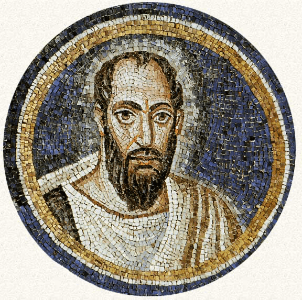
Paul had to face cultural presuppositions when he traveled around the empire. He overcame them by genuinely meeting people where they were.
Paul was well-traveled and well-educated, so he knew, at least well enough, the particular idiosyncrasies of the places he visited. When speaking to Greeks, he used philosophy and reason to explain his ideas about Jesus. When speaking to Jews, he showed how Jesus’ teachings were drawn directly from Torah. Like Jesus, Paul unites people from all walks of life—gentiles, Jews, enslaved people, free people, men, and women—equally into a unique community with a new cultural identity.
That new cultural identity part is essential because people from all walks of life: aristocrats, tradespeople, even prostitutes and tax collectors, were all hanging out in the same place, worshipping a new God proclaiming everyone is loved equally, no matter who they are or from where they come.
In an intensely stratified society like ancient Rome, that would have been scandalous.
Paul’s churches develop communal rituals and words that help connect these daring spiritual seekers beyond their individual languages and traditions. Over the millennia, those words have taken on new meanings and pronunciations, creating a vibrant, living faith practiced in a multitude of creative ways worldwide. Paul never intends for us to leave our cultures at the door. Quite the contrary. He wants us to celebrate the rich manifestation of God’s creativity in every human being, in every ethnicity. Paul works diligently to remove barriers for entry into a God experience (Christians don’t require circumcision, as in Gal. 6 and Romans 2) and into a community that celebrates the authenticity of every God experience.
1 Corinthians 12:4-11 (NRSV)
Now there are varieties of gifts, but the same Spirit; and there are varieties of services, but the same Lord; and there are varieties of activities, but it is the same God who activates all of them in everyone. To each is given the manifestation of the Spirit for the common good. To one is given through the Spirit the utterance of wisdom, and to another the utterance of knowledge according to the same Spirit, to another faith by the same Spirit, to another gifts of healing by the one Spirit, to another the working of miracles, to another prophecy, to another the discernment of spirits, to another various kinds of tongues, to another the interpretation of tongues. All these are activated by one and the same Spirit, who allots to each one individually just as the Spirit chooses.
This might be the most excellent love letter to diversity ever written. Everything comes from the same Spirit, and it is all magnificent, Paul says.
He goes on to insist the church is where that dream becomes a reality, but Paul had difficulty getting people to buy into his vision of a spiritually-based cultural context that integrates individual experiences. He spends a great deal of time writing corrective letters to his churches, because they keep falling back into old human patterns of patriarchal dominance.
Paul and Jesus both imagine a much more communal and egalitarian community.
Today, our always-on media too often exacerbates our perceived differences. But, the Internet also provides an incredible opportunity to ignite a profound appreciation for the mind-boggling variety and individuality of civilizations worldwide. And that appreciation of diversity is essential because living together in Paul’s transcendent space, being Jesus’ hands and feet, even acting as merely decent human beings, requires us to accept, acknowledge, and appreciate every human, and their culture, for the God-bearing blessing it is.
Amen.
Question: Which cultural context other than your own has most contributed to your spiritual journey?