
Part 1: Unnecessary Suffering
As a ’60s kid in DeKalb, Illinois, I lived on a hilly block near the intersection of Fairmont Street and Hillcrest Drive. My friend Steve lived a few houses up on Fairmont, and my other friend, Other Steve, was the opposite direction down Hillcrest. The three of us hung out all the time. In the summer, we’d play golf on the North 40 all day and kick-the-can until the streetlights turned on and our dad’s whistled us home.
In 1960s Midwestern Chicago suburbs, religion, especially Catholicism, still influenced people’s daily lifestyles and habits. I was seen as Jewish, whether or not I self-identified that way (Did I? Who knows? I was nine!). Both Steves were Catholic and ate fish every Friday. Once, my curiosity finally got the better of me, and I asked why they ate fish on Friday. After some silence, Steve awkwardly suggested, “Because Jesus ate fish on Friday?” knowing that was probably not the reason. Although, it was an educated guess because Jesus and the disciples ate a lot of fish.

Most Catholics today say they abstain from meat on Fridays, especially during Lent, as a way to focus on and share in the suffering of Christ, who they believe was crucified on a Friday. But, not eating meat once a week is neither suffering nor a fast.
The real reason Catholics eat fish on Friday is that it’s an ancient Jewish custom that carried over to Christianity, which promptly did its best to shed its Jewish heritage, so nobody today remembers the Jewish roots of their traditions.
Or, in extreme cases, that Jesus himself was Jewish.
But I digress.
Ancient Jews used to eat fish on Friday in part because Isaiah 58:13–14 (CEB) says:
If you stop trampling the Sabbath, stop doing whatever you want on my holy day, and consider the Sabbath a delight, sacred to the Lord, honored, and honor it instead of doing things your way, seeking what you want and doing business as usual, then you will take delight in the Lord.
Many Jews believed that God created fish on the fifth day of the week and honored God by eating fish — considered a delight in the ancient world — every Shabbat (Friday). Think about this! The original reason for eating fish on Friday and giving up meat once a week was not to suffer but to delight in the Sabbath with the Lord.
Lent is leading us to the cross, yes. But Christians spend so much time on the suffering of Jesus I think we forget that he’s all about joy and freedom, even during Lent. We eat fish not out of celebration, the way Jesus and his Jewish peers did, but because we think not eating meat is somehow a spiritual sacrifice, and God requires sacrifice.
Didn’t Jesus die in part to move us beyond that primitive, sacrificial thinking?
Over the decades, I’ve been on a journey with Lent to figure out what it’s really about and why people abstain from things they enjoy.

I’ve learned that many Christians from many different denominations stop drinking wine, eating chocolate, or otherwise deny themselves some physical pleasure without giving much thought to why they’re doing it.
There’s no other spiritual activity going on in their lives — no time with scripture, reading quantum physics, meditating, or praying. There’s just not any chocolate and wine. Which, honestly, I think are prerequisites to quantum physics and scripture.
Lately, Christians with a mind toward meditation and other ancient spiritualities have taken to fasting during Lent.
Lent does have roots in ancient Eastern ascetic practices like fasting. But fasting isn’t merely about denying yourself a tasty morsel, and asceticism isn’t all it’s cracked up to be, either. True fasting is a form of intentional mind-altering. Like other ascetic practices, it invites psychotic breaks and trips through colorful psychedelic realities melting into each other until we suddenly find ourselves laid bare before our most powerful mental, psychic, and spiritual demons.
Fasting is not to be undertaken lightly or without supervision.
Jesus experiences fasting psychedelia in the desert, and it is a nightmare:
Matthew 4.1–11 (CEB): Then the Spirit led Jesus up into the wilderness so that the devil might tempt him. After Jesus had fasted for forty days and forty nights, he was starving. The tempter came to him and said, “Since you are God’s Son, command these stones to become bread.” Jesus replied, “It’s written, People won’t live only by bread, but by every word spoken by God.” After that the devil brought him into the holy city and stood him at the highest point of the temple. He said to him, “Since you are God’s Son, throw yourself down; for it is written, I will command my angels concerning you, and they will take you up in their hands so that you won’t hit your foot on a stone.”
Jesus replied, “Again it’s written, Don’t test the Lord your God.”
Then the devil brought him to a very high mountain and showed him all the kingdoms of the world and their glory. He said, “I’ll give you all these if you bowdown and worship me.” Jesus responded, “Go away, Satan, because it’s written, You will worship the Lord your God and serve only him.” The devil left him, and angels came and took care of him.
This account is full of the angels, devils, and other fundamental archetypes people often describe when using mind-enhancing drugs like psilocybin or when mind and body are extremely deprived of nourishment, as was Jesus’ in this description.
Unfortunately, the fantabulous aspects of this story, as well as our own cultural prejudices, often prevent us from recognizing that Jesus is on a profound journey of self-examination, one that will undeniably cement his relationship with and understanding of God.
Jesus’ time in the desert, Buddha’s meditation under the Bodhi tree, Moses’ communion with God on Mount Sinai, and Mohammed’s revelations on Mount Hira are all examples of altered states of consciousness. They are achieved not necessarily through physical deprivation and suffering, but by preparing the mind for better reception.
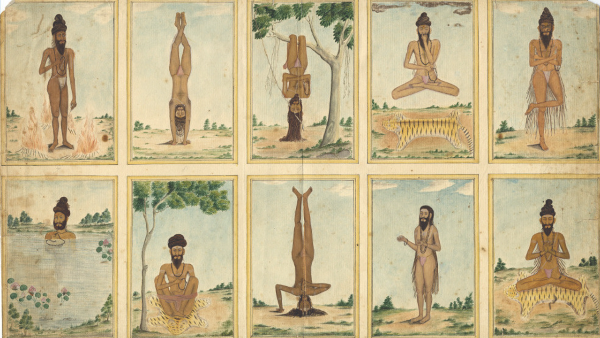
Buddha spent the first six years of his journey exploring the different ascetic schools in India. He tried hanging from his feet, lying on nail beds, and dozens of other practices based on the ill-conceived idea that physical suffering (and in many cases extreme physical duress) would lead to spiritual revelation.
By the end of his ascetic journey, it’s said the Buddha existed on a grain of rice a day. It’s then that he realized he was on a fool’s errand, that fasting leads to death, not enlightenment.

All his years practicing self-deprivation were valuable lessons learned, of course. Perhaps the most helpful is that an awakened relationship with God doesn’t require extreme, austere measures. It requires daily, moment-by-moment recognition of God’s presence wherever we are, all the time.
Enlightenment comes not from going overboard and denying the flesh as a pointless homage to suffering Jesus, or an ascetic romp with Buddha, but from adopting the mindset and consciousness of Jesus and Buddha.
Without doing any sort of physical gymnastics, Jesus teaches us to recognize God is everywhere we already are, in our flesh and the flesh of others, surrounding us and infusing us with new insight, laughing with us, crying with us, succeeding and failing with us, and yes, suffering with us.
Progress toward Oneness with God comes from understanding that our deserts and Bodhi trees can be discovered in every person and place we encounter. Every life experience leads us closer to God if we’ll take some time to enjoy the moments, instead of thinking we must suffer through them.
Amen.
Question: Is it necessary to suffer for God? Why or why not?