

Easter, like Christmas, is a season. In this case, 50 days. But while the runup to Christmas lasts months, and the post-Christmas wind-down proceeds with all the urgency of a resting sloth, Easter comes and goes with less fanfare. Radio stations don’t play Easter music 24/7. The stores are decorated, but mostly with Easter Bunny motifs. There isn’t much Christ in contemporary Easter.

That Easter has become about bunnies and egg hunts is unfortunate because the season that follows, Eastertide, is when Jesus’ post-resurrection appearances take place. And those visits from another dimension are essential to unlocking how Jesus’ followers were thinking after his crucifixion and the physically transcendent meanings of his otherworldly visitations. Especially since Jesus appears 13 times.
The numbers in the Bible are never random. The numbers have meaning. They matter.
A crucial bit of information missing from most biblical commentaries is the importance of the relationship between numbers and letters in Jewish spiritual literature.
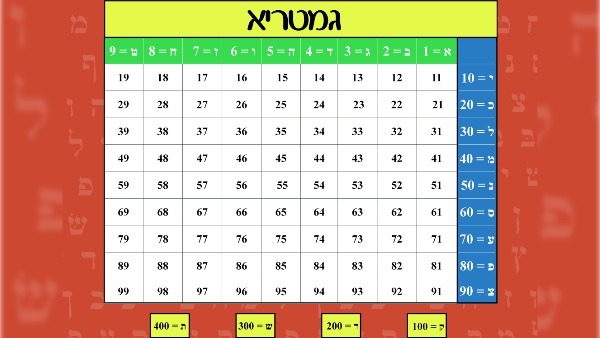
An ancient practice known as gematria assigns numerical values to letters, words, phrases, and sometimes entire sections of text.
The approach is intrinsic to ancient Jewish Bible study. It is one of the sources of our contemporary ideas about the number seven representing “good luck” and 666 being “the mark of the beast.” That’s gematria. It’s terrible, poorly researched, and wrong, but it is gematria nonetheless.
When Jews of the era read or heard Bible stories, they would have been aware of the subliminal context of the numbers an author or storyteller was using.
They didn’t need to dig into the numerical equivalents of every word — most of them couldn’t read to that extent anyway. But Jesus’ audience was triggered by specific numbers — especially sevens, 13s, and 40s.
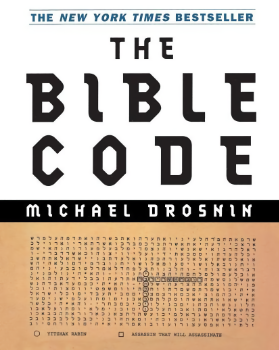
A few decades ago, the book The Bible Code made a big splash by taking advantage of the fact most people don’t understand how numbers relate to the 22 letters in the Hebrew alefbet. Gematria is complex. There are various methods, all governed by their own sets of rules. Gematria is a lot like calculus and equally as maddening. The Bible Code poorly attempted to use gematria to predict the future.
But traditionally, studying the numerical meanings of Hebrew texts is considered a spiritual practice, not a method of divination. Like many Jewish spiritual tools, gematria is a type of midrash, another way to coax commentary and inspiration out of the texts.
Essentially, it is an ancient — and advanced — form of cryptography. It would have been considered an appropriate form of study for anyone seeking gnosis, hidden knowledge — an idea that is the lifeblood of many different forms of mystical Judaism.
Now that we understand that number-letter/word relationships are relevant to our understanding of Jewish Wisdom literature, Jesus’ Easter season appearances take on an expanded meaning. Scripture records Jesus appearing 13 times after his resurrection over nearly 40 days. Both 13 and 40 are particularly significant numbers.
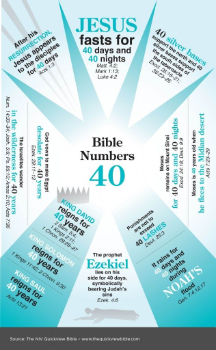
Most of us know about the number 40’s prevalence in scripture. Jesus spends 40 days in the desert, it rains for 40 days during the flood, Moses spends 40 days on Sinai, etc.
The number 40 repeatedly appears throughout both testaments and is prevalent for a few reasons. Bible scholars have long had a penchant for associating 40 with the average life expectancy thousands of years ago, which one could argue was about 40 years. That’s a little misleading, though, because human lifespans were the same as ours. Yes, life was harsher, and unsanitary living conditions meant thousands of people unnecessarily died from simple infections. But you know what? The people who wrote the Bible didn’t care about any of that. They didn’t see the number 40 and think anything as banal as “Whoa, that’s a lifetime.” For the Jewish people of The Book, the number 40 had nothing to do with lifetimes — there were plenty of grandparents around, after all — but instead represented a period of trial or rebuke preceding a radical transformation. Jesus in the desert, Moses on Sinai, etc.
But wait, there’s more!
Forty is often thought of as the product of 8 x 5. The number five signifies grace. There are five Levitical offerings, and Jesus feeds 5,000 with five loaves. Eight represents revival and new beginnings. These numbers, like most numbers in Hebrew, are typological, meaning they are both a number and a metaphysical symbol.
For ancient Jews, the number eight represented the spiritual level beyond the natural world. When we see eights in the Bible, or multiples of eights, like 40, we should think of the original hearers, who would have imagined a non-physical plane of existence, the spiritual Realm of God.
So, after the resurrection, that Jesus sticks around about 40 days means he was full of God’s grace while revealing something new, some new way to be in the world by being more at one, atoned to, tuned to, God.
During the 40 days in which Jesus is revealing this new, deeper understanding of reality, the gospels record 13 appearances. In reality, there may have been more or zero. It doesn’t matter because, for the authors purposes, it’s crucial Jesus return 13 times. Why? Because of an ancient Jewish rite of passage called the bar (for boys) or bat (for girls) mitzvah. And everything that ritual symbolizes.
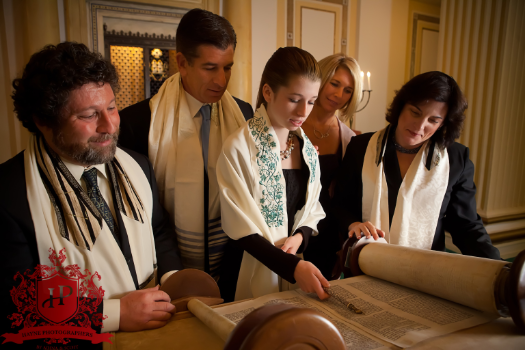
When a Jewish child turns 13, they become Bar- or Bat-mitzvah. It’s not past-tense, bar-mitvahed. It is a transformation, a moment of becoming. When we become bar or bat mitzvah, we become sons and daughters of the Commandments. It is our acknowledgment that we are ready to take on our communal and covenantal responsibility by promising to adhere to God’s commandments about righteous living,
A bar mitzvah is about spiritual transformation. It’s not merely a celebration of childhood’s transition into #adulting. This was particularly true in the First Century when children worked as frequently and arduously as adults. A bat mitzvah is a soul-stirring occasion of commitment to the righteous ways of Yahweh and the community, a promise to uphold the commandments, and a symbol of entrance into spiritual maturity.
And it happens when one turns 13.
The authors of Jesus’ 13 appearances knew their audience would subliminally associate this number with a momentous life transition and rethink Jesus’ death, not with the permanence of Sheol, but as a bar mitzvah style coming-of-age celebration. Jesus isn’t dead. He’s bar-mitzvah, fulfilling his obligation to the Commandments, like every one of them, their kids, their grandparents, and their parents’ parents, all the way back to Abraham.
For a group of students terrified and distraught by the murder of their Master, Jesus not only returns to assure them they will carry on his work, his 13 appearances also indicate transformation into a new being — an idea that comes to fruition at Jesus’ ascension… wait for it… 40 days after Easter.
The numbers mattered to our Jewish and early Jewish-Christian pioneers. As we continuously look for new and more profound layers of meaning in the Bible, learning a bit about biblical numerical symbolism is fascinating. We don’t want to go all Bible Code and try to predict the future, because the Bible is never about predicting the future. But the numbers, their meanings, and their interactions with written Hebrew, give us insight into the ancient Jewish culture and their thoughtful processes of searching for meaning, even though they were telling what were, by then, already millennia-old stories.
Throughout the 50 days of Eastertide that lead to Pentecost, a holiday named after a number, I encourage us to spend some spiritual time reading about and considering the symbolic significance of the numbers in scripture we often gloss over. Because to continue making progress toward the peaceful, love-filled, cooperative, enlightened and ascended world Jesus envisioned, we can no longer gloss over anything.
Question: Which numbers in scripture are meaningful to you and why?
A cool reference on the most commonly occurring numbers in the Bible is available at this link. If you’re interested in learning more about gematria, an excellent article is available at the Jewish Virtual Library.