

For the next 12 days (Christmastide), Christians worldwide celebrate the birth of Jesus.
Cuddled in the bare-naked embrace of winter’s trees, days spent more in darkness than light, the Christmas season provides a warm, introspective environment to consider a fundamentally crucial theological question: Is the Christmas story about Jesus, or us?

Christmastide in most churches is firmly rooted in the former.
Through an eclectic and wonderfully diverse variety of festivals, church services, and social gatherings, the 12 days of Christmas are typically spent teaching about Mary and the “Holy Family.”
We are encouraged to read the stories of Jesus’ early life (what little we know about it) and reflect on what he teaches us about our own.
This is essential work, especially as Mary tends to get very short shrift in most Protestant churches. But, it is not all of the work. Making the story exclusively about Jesus misses the spiritual point.

The Jesus cycle — the entire narrative from birth to death — is, like most ideas in Christianity, a both-and narrative. It is about Jesus and Us. And it is not only about us in the way we respond to Jesus, by serving in his name, praising, worshiping, or following him, or any of the other things we do with (and to) Jesus.
The story of Jesus is the story of us, and the nativity, in particular, is about rethinking our approach to the physical world — including reframing the essence of matter.
We should closely identify with the idea that God is born in Jesus. We are to recognize in his light, our own. The story of Jesus is the story of all of us, struggling every day to ignite the light of God within us — the Christlight, for Christians — and to keep it lit.
I’ve been thinking about this — and we’re discussing it the day after Christmas — because I adamantly believe we must understand the birth story of Jesus as a story about all of us.
It’s not just that God is born and named Jesus. God is the eternal being of all of us. In every child is born God. Understanding that is key to changing our reality in any meaningful way.
We make a mistake separating ourselves from God and God from Jesus. The idea that Jesus is God and God is God, is a concept perplexing to atheists and Muslims alike.
Jesus, as representative of God in human form, is Monotheism. Jesus as the son of God, equal to but separate from, is not. It’s duality religion — good and evil, positive and negative — of precisely the sort Jesus is trying to dispel with his non-dual consciousness.
What is non-dual consciousness? God is all there is. God is the Oneness of all creation, the quantum physics of reality itself. God is not beyond reality. God is reality — the ugly beauty of it, the very laws of physics of it. If we honestly want to find God, we need to do the math.

Advanced math is beyond my capability, so I look to nature and the spiritual practices of centering prayer, meditation, and reading to keep me centered in the Godlight.
Sometimes, I read scripture, yes, but it is always tempered with history, politics, genetics, physics, astronomy, and other sciences relevant to our work on Earth, which is recognizing God’s activity in everything secular until everything is sacred.
The gift given to humanity is conscious awareness of this truth: that everything is sacred, and many masters have appeared to teach us how to become more aware, and then stay tuned in more consistently and continuously.
We are God’s light in the world. Just like Christ. The prophet Isaiah tells us so:
Isaiah 9:2–6 (CEB)
The people walking in darkness have seen a great light.
On those living in a pitch-dark land, light has dawned.
You have made the nation great; you have increased its joy.
They rejoiced before you as with joy at the harvest,
as those who divide plunder rejoice.
As on the day of Midian, you’ve shattered the yoke that burdened them,
the staff on their shoulders, and the rod of their oppressor.
Because every boot of the thundering warriors,
and every garment rolled in blood will be burned, fuel for the fire.
A child is born to us, a son is given to us, and authority will be on his shoulders.
He will be named Wonderful Counselor, Mighty God, Eternal Father,
Prince of Peace.
Did you catch that?
The people living in darkness have seen a great light. That light is not Jesus himself, by the way, but that which lights even Jesus — God.
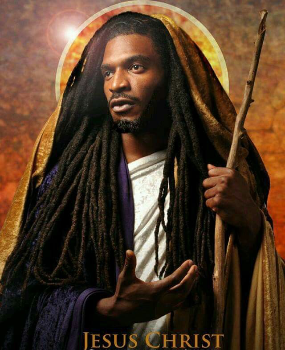
God is the light, and Jesus is so aware of his Godlight that he wants to help us turn ours on, too.
I believe that more than being worshipped, Jesus wants us to get connected, to plug in, tune up and turn on to God.
Not in a cheesy “Up With Jesus” sort of bell-bottomy, schticky dance group way, but honestly get connected and tune-up.
And that is hard, long-term work.
We are finely tuned musical instruments made to resonate with the light and love of God.
But a good instrument requires maintenance and must constantly be tuned. We must urgently focus on our spiritual maintenance and tuning because darkness again falls across the world, casting long shadows over everyone’s Godlight.
We can turn things around, but we must get reignited. The Godlight entirely changes who we are as a people. It turns greed into selflessness, fear into unconditional acceptance, hate into love, and imbalanced, unjust, inequitable systems into infrastructures primarily concerned with the communal good.
Once I begin to intentionally think about all my actions as God’s actions, that my human experience of good, bad, happy, and sad is also God’s experience, I am changed.
This more expansive understanding of God gives me comfort and helps me step back a bit and go, “wow, okay, I appreciate what just happened as an experience of myself as the all-being of God. But still, I hope I never have to go through it again.”
At other times we might say, “All right, this was great! I’ll take some more of this!” Either way, the value of good or bad is our temporal interpretation of a more considerable God experience.
God is the more extensive experience, as Jesus’ birth story conveys. So, God is not just with us through thick or thin. We are God as an experience of thick and thin. Our physical, material experience is a God experience. Just as it was for Jesus.
And that should be enough to change the world.
Amen.
Question: Where is the both-and in your Christmas story?