

“The time has come,” the Walrus said,
— Lewis Carroll, The Walrus and the Carpenter from Through the Looking-Glass and What Alice Found There
“To talk of many things:
Of shoes–and ships–and sealing-wax–
Of cabbages–and kings–
And why the sea is boiling hot–
And whether pigs have wings.”
What happens when one generation’s nonsense becomes another’s reality? A short 150 years ago, Lewis Carroll thought a boiling-hot sea was as ludicrous as flying pigs. He was making a joke, but today, our oceans boil entire species to extinction. If I look out my window tomorrow and see a winged pig perching on the ledge instead of the usual pigeons, I’m just going to pack a bag and go — well, I don’t know where I’ll go. Through the looking-glass, I suppose, or maybe back through it, since our present world seems to be the alternate, reverse reality.
How backward is our world? Consider that our systems, everything from healthcare to education to transportation, are designed to favor the richest instead of the poorest. The situation is most evident in America, where, in the last 20 years alone, the government has acted to protect corporate profits over people’s well-being multiple times: bailing out the banks, auto manufacturers, energy companies, and others while simultaneously decrying the government doesn’t have enough money for single-payer healthcare or green energy.
Still don’t think we’re through the looking-glass? We over-farm the planet, yet, according to the U.N., 800 million of us starve every year. We’ve failed to neutralize carbon emissions, so we don’t care about the health of our planet, which ultimately affects whether or not we survive as a species. I’d say it’s lunacy, but I don’t want to insult the Moon.

Our faith also seems distorted. Specifically, American Christianity seems opposed to everything Jesus talked about and exemplified. Instead of love your neighbor as yourself, welcome the immigrant, take care of the poor, the orphan, and the widow, we discover through the Christian looking-glass, a gloomy and twisted religion where people worship the blood sacrifice of a blue-eyed, blonde-haired demigod instead of embracing the lifestyle teaching of a rebellious, dark-skinned Middle Eastern Jew who was fed up with the way the system chewed up and discarded people.
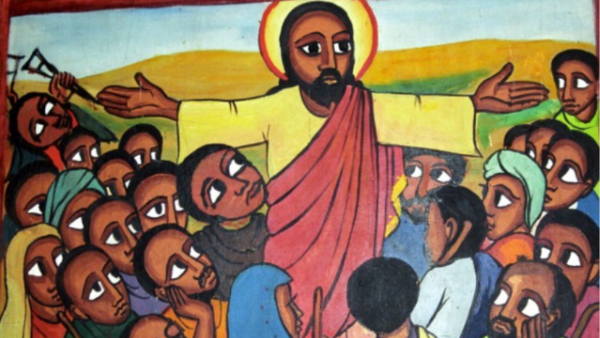
The conversion of Jesus from a Jewish radical who fought power with peace to Thor has been disturbingly and profoundly detrimental to the world, but especially to American society because Thor Jesus emphasizes white power. As with slavery in America, Christianity’s racist, anti-Semitic past has yet to be resolved in any meaningful way. Pogroms against Muslims and Jews perpetrated by Catholic and Protestant “Christians” have caused monumental social, psychological, and spiritual damage.
That cannot possibly be what Jesus intended.
The long history of Christianity in America is permanently entwined with slavery. In the colonies, the Bible was used to cajole, influence, and condemn, all by power-hungry white men who thought God gave them the right to rape, pillage, and plunder an entire continent.
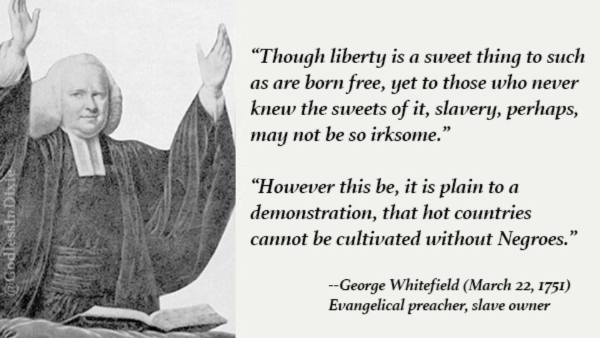
Built on that reprehensible foundation, it’s no surprise that American Christianity in the 21st Century is indelibly associated with con games, scams, closed minds, the white patriarchy, the gospel of wealth, a magical, inerrant and infallible Bible, and other contemporary evils. Whether or not that perception is accurate or fair doesn’t matter, my friends. It is the way Christians are viewed. Most people don’t make distinctions between one form of Christianity or another. One bad apple does spoil the whole bunch, contrary to what the prophet Donny Osmond once sang.
Making matters worse, recent polls from Barna, Pew, and others and articles in magazines such as Salonshow people believe Christianity is increasingly extremist. A recent Barna poll found more than 50% of Americans consider Christianity extremist. That tracks with a Christian Post poll revealing that 71% of Americans think “the church is full of hypocrites.”
These current facts and the horrifying human rights abuses the Church has committed throughout history should make those who sincerely love Jesus and are trying to figure out how to exemplify his compassionate way consider whether or not we are, and want to be called, Christians.

Jesus followers and people working hard to lead a Jesus-inspired, compassionate, inclusive of all people life must, and I mean must understand that if we tell someone we are a Christian, they are going to presume very un-Jesus-like things about us. Even Gandhi once remarked that he loved Jesus, but Christians? Not so much.
If we want to avoid being lumped together with the Christians who unironically self-identify as pro-life and pro-gun (I mean, come on!), we spend a lot of time explaining, “I’m not one of those Christians.” Many of us say something like, “Oh, I’m a progressive Christian,” but we might as well be talking about cabbages and kings for all the sense the phrase “progressive Christian” makes to the average American. I’m not sure it makes sense to me, either.
What is a “progressive Christian”? Shouldn’t any religion built on the teachings of Jesus be progressive? Who do the “not progressive” Christians think Jesus was? He challenged the entire religious establishment of his day. In part, that’s what gets him killed! “Progressive” should be implied in any religion established in Jesus’ name.
And maybe that’s the problem. The religion created in Jesus’ name is called Christianity, and Jesus’ name wasn’t Jesus Christ. Christ is an appellation, often used throughout Jewish history, that simply means “anointed.” It was a term freely applied to Jews and non-Jews alike. The Persian King Cyrus is a notable example. Jesus’ followers thought of him as anointed by God. Lots of Jews still believe that about their teachers.
Jesus teaches that we all are anointed. So “Christian” should refer to the fact we are all anointed — not to “proclaim the good news of Jesus Christ,” especially since we can’t agree on what that “good news” is, but — and much more importantly — to act like Jesus in the real world.
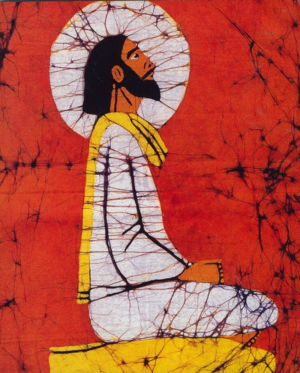
Jesus was my first and remains my most dear Guru. And what he has taught me has little to do with the religion called Christianity and everything to do with keeping my awareness, my being, my actions, reactions, and thoughts focused on experiencing God’s presence, here and now. In short, Jesus teaches us to remain Christ-centered. That doesn’t mean we worship Jesus. It means we stay centered, the way he was, in the ever-flowing energy of God.
Christianity has become about Jesus, but Jesus was about God.
The Christ-centered life is different from Christianity, I think. At least, it’s different from what most people define Christianity as these days. The Christ-centered life is effortlessly difficult, a concept video gamers will understand. The best videogames are “easy to learn but difficult to master.” That’s Jesus’ teaching, too: easy to learn but difficult to master.
That’s why Jesus always encourages his students to keep going, dig deeper, ignore the critics, trust in God, and relax through the journey. Jesus knows the task seems impossible — I mean, he ends up on a horrifying torture device invented by the same people who invented Christianity.
Easy to learn, difficult to master.
A Christ-centered life is what Christianity has aspired to but failed miserably to achieve: the creation of disciples (a fancy word for students) with a thirst for lifelong learning and an insatiable desire to emulate, not worship, Jesus the Jewish radical who loved lepers and ate with tax collectors and prostitutes and treated every one of them with love, respect, and patience — men, women, and children, because Jesus knew there are no exemptions from God’s love. Not in this or any world.
Living the Christ-centered life, we begin to live outside of ourselves and understand that black, brown, white, women, children, the poor, orphans, homosexuals, the differently-abled, Jews, Muslims, Christians, Buddhists, Taoists, Zoroastrians, atheists, deists, and theists alike are all God-bearers, all loved, all accepted. It does not matter what you call yourself, and it certainly doesn’t matter what someone else calls you. God loves you. Unconditionally. That is the crux of Jesus’ message and the reason he says we should love each other, too: because God loved us first.
When we are Christ-centered enough that God is love causes us to stop and think before we act, we quickly realize there is no “right” religion or “only way” to God because God doesn’t care about religion. God cares about living through us, as us.
When we are Christ-centered, like Jesus, like Alice through the looking-glass, we speak truth to power, especially religious power.
When we are Christ-centered, we want to emulate Jesus in every way: Jesus the radical, who tries to eliminate money from the synagogue and religion from the government. Jesus the mystic who teaches that God is alive within us, within every particle that makes us living beings. We even emulate Jesus, the faithful Jew who wrestled with the practice and perception of his religion the way we Christians struggle with ours today.
Amen.
Question: What’s the difference, if any, between being Christ-Centered or Christian?