
We the People of the United States, in Order to form a more perfect Union, establish Justice, insure domestic Tranquility, provide for the common defence, promote the general Welfare, and secure the Blessings of Liberty to ourselves and our Posterity, do ordain and establish this Constitution for the United States of America.
— The Preamble to the Constitution of the United States of America.
The past week has been difficult for progressive people of faith who believe the world’s systems need humane, divine, and compassionate realignment. America’s Congress remains gridlocked along ideological lines despite multiple polls revealing a plurality of regular folks, both Democrat and Republican, think it is the government’s duty to provide easy access to voting and both physical and social infrastructure like roads, bridges, emergency services, universal healthcare, education, paid time off and a host of other inalienable human rights already codified into law in most other Westernized countries worldwide.
It seems that those of us who are not in Congress understand and overwhelmingly support the social investments some members of congress refuse even to discuss — and these proposals are investments. What is America if we don’t repair our roads, bridges, and hospitals? Who are we as a people if we don’t want to finance healthcare and education? If we don’t want to ensure that all of our people are cared for and well educated, if we don’t want to love our neighbor, who are we?
Fortunately, although our government is dysfunctional, Gallup and other pollsters show average Americans understand these social programs are necessary and easily financed. In the current budget, prioritizing well-being over war would unshackle billions and billions of dollars for our social well-being. And by revising the tax structure so it is simpler and more equitable, along the lines of the systems used in Nordic countries, America could catch up to the rest of the civilized world and maybe even lead — not based on GDP, but ton he overall wellness and happiness of our people.
By the way, healthier, happier people are also more productive.
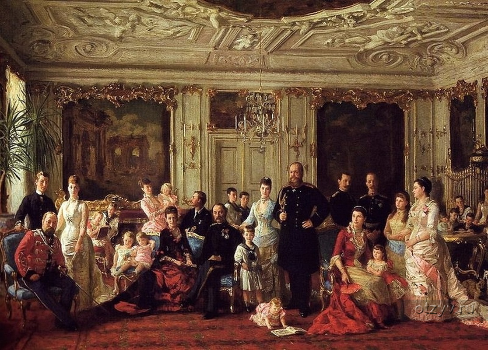
It is times such as these when the aristocracy by any name demands the people eat cake and the people want to tell the aristocracy what to do with that cake that prophets arise to warn us of the error of our ways and realign us with God, whose righteousness never falters.

Today we call them pundits, and they go by names like Jon Stewart, John Oliver, Trevor Noah, Oprah Winfrey, Nicole Byer, and Wanda Sykes (women pundits of color sadly missing from Vanity Fair’s photo). While they might not discuss God directly, their critiques of contemporary society are based on the same foundations as those of the biblical prophets: All humans deserve to be cared for equally.
In the past, these pundits had names like Jeremiah and Amos. While I don’t know if either could deliver an effective punchline, all the First Testament prophets were disruptors who spoke scathingly against both religious and secular leadership for ignoring the well-being of the people.
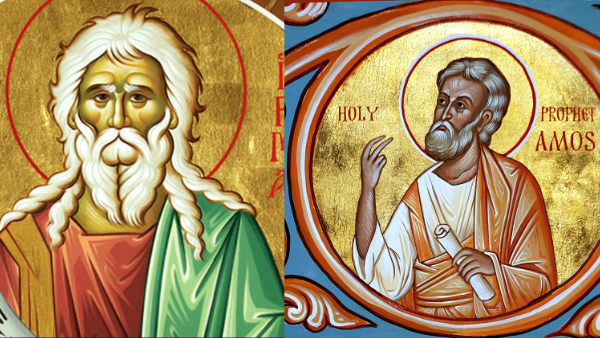
The prophets, particularly Isaiah, take their leaders to task and urge the people to adjust to changing times and do new things to rectify their situation. Isaiah asks us not to dwell in the past but to adapt and to innovate in the present:
Isaiah 42:9–10 (CEB)
The things announced in the past — look — they’ve already happened, but I’m declaring new things. Before they even appear, I tell you about them. Warrior and mother sing to the Lord a new song! Sing God’s praise from the ends of the earth!
Sing a new song! Do a new thing! Humans are created to create. We’re at our best when we have space to innovate, to allow God to inspire us to unparalleled greatness. But nobody can do that if they’re hungry, sick, and uneducated. A system that shackles us to subhuman status is an abomination to God and Isaiah is quick to point that out:
Isaiah 42:14–16 (CEB)
I’ve kept still for a very long time.
I’ve been silent and restrained myself.
Like a woman in labor I will moan;
I will pant, I will gasp.
I will wither mountains and valleys,
and I will dry up all their vegetation.
I will turn rivers into deserts,
and I will dry up pools.
I will make the blind walk a road they don’t know,
and I will guide them in paths they don’t know.
But I will make darkness before them into light
and rough places into level ground.
These things I will do;
I won’t abandon them.
The Bible includes a record of disruptors like the prophets who stood up in situations like ours, with a leadership insensitive to the needs of its people and people too numbed by the bread and circuses of the modern Empire to hold their leaders accountable. For anything, it seems.
Yet, from Moses to Jesus, page after page of the Bible is filled with stories of people like us who resisted the status quo, who reminded authorities not to mistreat people, who demanded that our faith in God be greater than our addiction to Mammon.
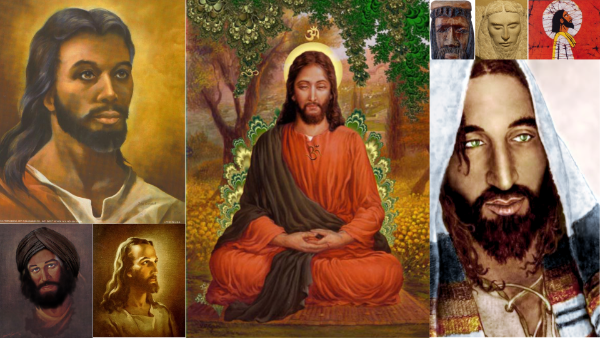
Jesus insists we love others as ourselves, as revolutionary an idea today as it was 2000 years ago. And while “love they neighbor” is about you and I getting along, Jesus doesn’t intend this as an exclusively personal directive. “Love They Neighbor” is the foundation upon which our societies — and our businesses — are to be built.
And it is the most disruptive idea ever.
Jesus believes in the kingdom of heaven, which I prefer to all the Realm of God. He is not talking about life after death or a city in the clouds! Jesus wants his followers to be builders — creators of an entirely new world based on the most ancient biblical principle of all: Covenant. Jesus wants to build this new world of love, compassion, peace, cooperation, and equity right here, right now, with help from his followers.
Jesus’ ministry is fundamentally about reminding his fellow Jews to honor their covenant with God — a covenant that sees God, and God alone, as the owner of all things. There is no private property in the Covenant, a critical point rarely mentioned in today’s society where we just assume everything must be for profit.
As Christians, contemporary followers of Jesus, we, too, have a covenant, a contract, with God to look after the welfare of God’s people (which is everyone on the planet). In the Realm of God that Jesus persistently talks about, everyone has equal opportunity. The equitable distribution of all things — food, education, housing, healthcare — is a magnificent Utopian ideal derailed even thousands of years ago by partisan politics and private property.
By the time Jesus preached against the system, literalism and legalism were ingrained in the Jewish leadership who were stuck, sidetracked by the deep pockets of Rome, just as Corporate Lobbyists control Congress today. We have different names for the players, but our system and its current state of ill repute is frighteningly similar to early 1st Century Judea under Roman occupation.
Today’s Democrats and Republicans aren’t that different from yesterday’s Sadducees and Pharisees, stuck in the murky mire of politically-influenced religious power-mongering, incapable of accomplishing anything other than crushing the will of the people and ignoring Our obligation to God to love our neighbors.
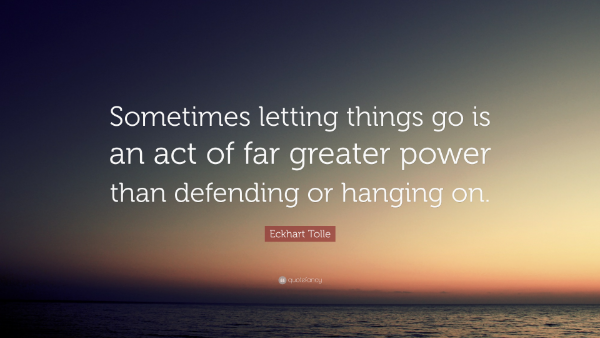
Jesus’ kingdom is disruptive because it doesn’t look like other kingdoms. It isn’t about power. It’s about letting go of power. Jesus’ kingdom, the Realm of God, removes power from both priests and politicians. Jesus tries to move us all out of letter-of-the-law legalism by reframing everything we do, all that we are, as an aspect of God’s unconditional love. Which requires us to care more about our neighbor than any nation. Which demands we love people more than profits.
I honestly don’t know what a government built on the idea that our neighbor’s needs come first looks like, but I know it has nothing to do with kings, even when we call them Senators and Representatives.
I do know that Jesus teaches us that when God’s compassionate, grace-filled, creative, universally equitable love-nature fills us from deep within, it is we who become the builders of new realities, we who become disruptors for the Realm of God.
We, the people.
Amen.
Question: How might we be modern-day disrupters?