
While doing my typical weekly research and writing peppered with calls, meetings, marketing, and developing a service on epiphany and/or the baptism of Jesus, I also finished formatting a Kindle eBook I’ve been working on.
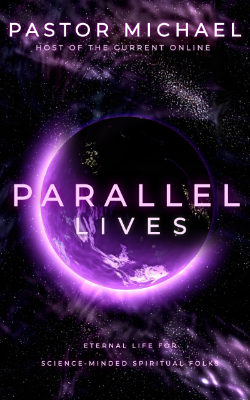
This isn’t a significant novel or anything. It’s just a 25-page booklet about new ways to think about death and eternal life. Lately, I’ve been asked for information about the topic, and I thought that a book would be best for assembling and sharing the info.
I mention this because one of the first responses I received led me on a fascinating journey of discovery. On Facebook, someone responded with no comment, only a link to someone I’d never heard of named Tom Cheetham.
I’m a little wary of hyperlink responses to my posts because 98% of the time, they’re Evangelicals who think I’m leading everyone to hell with my tales of universal love and acceptance. I once clicked on a link someone posted, and it took me to a YouTube of a priest performing an exorcism on whoever was watching the video. My inner demons were amused.
So it was with some trepidation I clicked on this link, expecting the usual.

Instead, I was immediately engrossed by a YouTube video of one of the most fascinating conversations I’ve heard in years with author and obviously very smart guy Tom Cheetham about his book, The World Turned Inside Out.
The book is about French philosopher/psychologist/linguist/Islamic Mysticism scholar Henry Corbin, whom I had never heard of, even though he’s like the second most important person in the development of archetypal psychology, with Carl Jung.
The experience of an enlightening gift from a stranger is as bracing as winter’s cold water on your face before bedtime. And Corbin has me thinking about revelations — epiphanies, appropriate for the week of January 6 when Christians worldwide celebrate Epiphany and Theophany.
In the Western Christian tradition, Epiphany celebrates the revelation of the Christ to the world beyond the Jewish people and is told in the story of the magi:
Matthew 2.1–2 (CEB):
After Jesus was born in Bethlehem in the territory of Judea during the rule of King Herod, magi came from the east to Jerusalem. They asked, “Where is the newborn king of the Jews? We’ve seen his star in the east, and we’ve come to honor him.”
The magi were influential Persian advisors. They were astronomers and astrologers, and they set out on their quest, not knowing what they would find illuminated under the star. When they arrive, they have an epiphany — God is manifest in human form, in the flesh. The Magi have a theophany, an encounter with God. I’ll be this encounter caused an epiphany, too, as the magi immediately began considering what precisely the birth of God in the flesh means for them, their people, and the world.
While the West emphasizes the revelation of Jesus as Son of God, the Eastern church commemorates Jesus’ baptism with the holiday of Theophany. It marks the disclosure of the Holy Trinity to humanity: Jesus is the son of God, the Dove that appears at Jesus’ baptism represents the Holy Spirit, and the invisible voice affirming its happiness with Jesus is God, as described in Mark 1:4–11:
Mark 1:4–11 (CEB):
John the Baptist was in the wilderness calling for people to be baptized to show that they were changing their hearts and lives and wanted God to forgive their sins. Everyone in Judea and all the people of Jerusalem went out to the Jordan River and were being baptized by John as they confessed their sins. John wore clothes made of camel’s hair, with a leather belt around his waist. He ate locusts and wild honey. He announced, “One stronger than I am is coming after me. I’m not even worthy to bend over and loosen the strap of his sandals. I baptize you with water, but he will baptize you with the Holy Spirit.” About that time, Jesus came from Nazareth of Galilee, and John baptized him in the Jordan River. While he was coming up out of the water, Jesus saw heaven splitting open and the Spirit, like a dove, coming down on him. And there was a voice from heaven: “You are my Son, whom I dearly love; in you I find happiness.”
Epiphany means “appearance or manifestation.” The term has morphed over time into what we typically think of as a comedy outtake starring a cartoony mad professor shouting “Eureka!” and carelessly pouring bubbling test tubes into some assuredly explosive mixture.
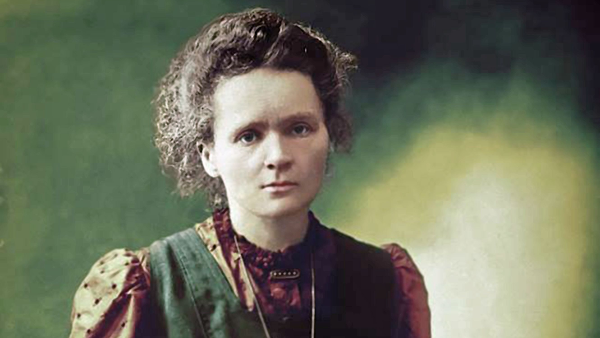
It’s not an entirely far-fetched stereotype because people who IRL make reality-changing discoveries are like Marie Curie, whose innate penchant for radioactivity, you know, is a little mad-sciencey.
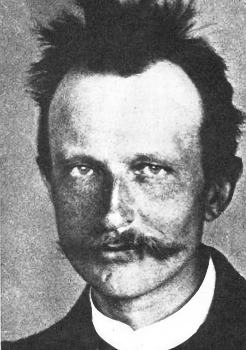
Or Max Planck, who discovered energy quanta, revealing an entire world we previously didn’t know existed.
Epiphanies are often paradigm-shattering revelations. But what if there are everyday epiphanies, too, revelations from the Conscious Universe, theophanies, indirect revelations of God through random strangers like my Facebook commenter?
Although I am just getting started with Corbin, his work is already a revelation. With Jung, Corbin developed the concept of archetypes — universal symbols that arise from the collective subconscious. While Jung went on to connect contemporary society with Renaissance archetypes (more or less) Corbin had an epiphany when introduced to Islamic mysticism. Reading his mashup of neo-platonic, Arabic, Zoroastrian mythology is mind-bending. And it has reminded me that once freed from dogmatic baggage, the mysticism of East and West is surprisingly similar, and always pointing to Oneness.
While Eastern and Western Christian churches have developed unique traditions and rituals, they share a story of God who is powerfully and palpably manifest in the world. From the nativity to the Magi, we’re encouraged to sense God within us and the world in a physically intimate way — so much so that we begin to realize God is everything — and that God is often made manifest through strangers, even sometimes on Facebook.
Amen.
Question: What has been your experience of epiphanies?