
Palm Sunday, Good Friday, Ramadan, Rama Navami, Passover, and Easter all occur within days of each other this year. When there is a confluence of religious celebrations like this, spring must be in the air. Sing, joyous spring!
It’s thrilling watching the wood giants outside my window change their seasonal clothes, the sticky-sweet-smelling, ambrosia-filled buds ready to burst winter’s seams. Renewing life transforms the hard, cold greyscale of winter into the lush verdant grasses and softly-washed pastel skies of spring. Sing, joyous spring!
A multitude of holidays cluster around spring because we first form our ideas about the world by observing and reacting to it. Spring has inspired humans to think about life, death, and rebirth for tens of thousands, perhaps millions of years.
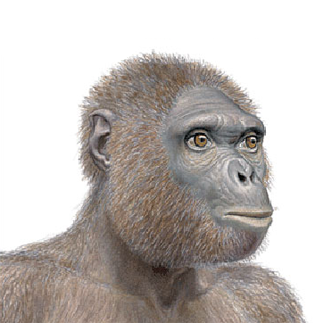
The earliest Hominids, including our friend Ardipithecus here, roamed Africa entirely dependent on nature’s whimsy for shelter and sustenance. It only takes a couple of seasons for Ardi to notice the trees, seemingly dead in winter, burst back into full-boughed life in the spring. A few seasons more, and entire tribes realize the seed they plant in the ground grows food every season as well. Every year, life seems to retreat and return. Like clockwork, you might think, if clocks were invented.
It’s natural to watch Earth’s flora and fauna slumber and awaken and wonder if the same thing happens to us. Is death merely sleep until next spring?
I assume our ancestors noticed pretty quickly that dead humans don’t come back to life every season — an absolutely terrifying thought, frankly. Over eons, the fact there isn’t a mass zombie uprising every March, even while the trees and some animals appear to return to life after a deceptively long slumber, made us consider what does happen to us after we die and ask, “If we don’t wake up here, is it possible we wake up somewhere else?”
At some point, humans came to believe in an afterlife. Sometime in the 10th or 11th Century BCE, the Iranian prophet Zoroaster introduced concepts about death that would become the foundation for Jewish, Christian, and even Greco-Roman thought as well: afterlife trials, crossing a river (in this case, a river of tears), and final judgment are all Zoroastrian innovations.
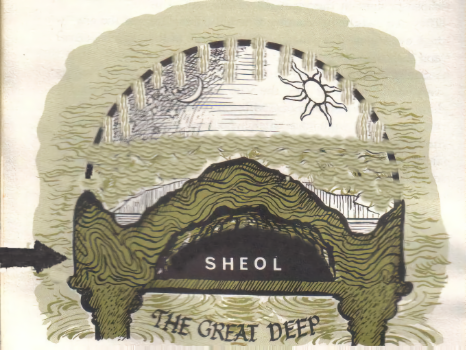
Early Jewish people of the region adapted Zoroastrianism and developed Sheol, an absolutely final resting place with no judgment — once a person died, no matter their lot in life, prince or pickpocket, their soul went to Sheol and that was the end of it.
Of course, religion evolves. As the Mediterranean cultures became more enmeshed in each other’s daily activities, cross-cultural influences became more pervasive. Hellenization profoundly influenced Judaism, and when the Greeks translated the Hebrew Bible, Sheol became Hades, paving the unstoppable road toward belief in afterlife gated communities, one for good folks, one for bad folks, so prevalent in contemporary society. Unfortunately.
I’ve been thinking about our different afterlife concepts because it occurred to me that our views of the afterlife affect how we live in this one. That rabbit hole started because I was meditating on Jesus’ entry into Jerusalem. It’s quite a remarkable, insanely courageous act. Why does he do it? Where does he get the strength to face Rome, the greatest empire the planet’s ever hosted? Is Jesus encouraged, at least in part, because of his more insightful understanding of reality, of what it means to be, even beyond death?
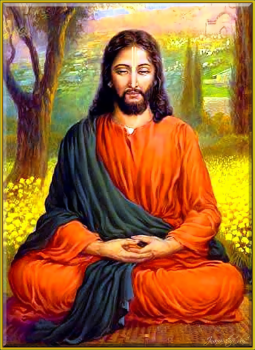
Jesus is a teacher of Oneness, a word thrown around carelessly these days. For spiritual philosophers such as Jesus and Buddha, though, Oneness is not homogeneity. It is the deep understanding that the many different people, creatures, and objects in the world comprise a unified whole. It is difficult to comprehend unless we think beyond our bodies and sense of self.
Jesus is a master of the detached self. He knows there is one thought, one energy manifest in an uncountable number of avatars like himself, Buddha, and Rama. But he also knows — and desperately wants to teach us — that we are all part of the Oneness of God, too. Even Caesar Augustus, Pilate, and Judas. Even the rocks. And the trees, especially the trees, the perfect example of a sentient, living, communicating organism, a whole entity with millions of living contributors.

So, understanding his present life is one branch in his Tree of Life — in the tree of life, because there is only one we all share — Jesus confidently rides into Jerusalem. For added effect, he rides in on an ass — a scathing commentary about Augustus, Pilate, and the entire Roman Empire. If the powers that be weren’t going to kill him before, Jesus sealed his fate with that stunt.
Knowing Rome would crucify him for sedition, Jesus has made his peace with death. I think, in part, because he understands that, ultimately, his bodily incarnation is not who he is. Jesus in First Century Judea is an aspect of God, an avatar, who will perish at the hands of the Roman authorities. Jesus knows and accepts that this is what he’s here for.
In the last week of his life as described in the Gospels, Jesus seemingly wants to share his understanding of what we could call multidimensional existence with his students. He assures the disciples that death is merely a transition from one season to another (Matthew 9), he transfigures in front of them (Mark 9), and even the appearances after death are to show them that life is not rooted in our physical existence.
Matthew 9:18–25 (CEB)
While Jesus was speaking to them, a ruler came and knelt in front of him, saying, “My daughter has just died. But come and place your hand on her, and she’ll live.” So Jesus and his disciples got up and went with him. Then a woman who had been bleeding for twelve years came up behind Jesus and touched the hem of his clothes. She thought, If I only touch his robe I’ll be healed. When Jesus turned and saw her, he said, “Be encouraged, daughter. Your faith has healed you.” And the woman was healed from that time on.When Jesus went into the ruler’s house, he saw the flute players and the distressed crowd. He said, “Go away, because the little girl isn’t dead but is asleep,” but they laughed at him. After he had sent the crowd away, Jesus went in and touched her hand, and the little girl rose up.
The girl isn’t dead but asleep, Jesus says. Like a hibernating bear and winter’s trees. And maybe we.
While wandering the reawakening landscape recently, I noticed that humans and nature address the change of seasons quite differently. In winter, trees shed everything — all their leafy clothing — while humans pile on as much stuff as possible. At one point in February, when the trees were imposing even in their stark nakedness, I was wearing three shirts, a sweater, a jacket, hat, and mittens. Inside the house. To go out I just duct-taped on a layer of pink fiberglass insulation.
I realize now I should be more like the trees and, in my spiritual winters, strip down to the bare nakedness of everything I think I am, and keep going until I shed it all to make room for new growth, a journey down an unfolding branch on the tree of life. And, understanding I am journeying down all the branches right now, perhaps find the courage of Jesus to ride into town and call out the evils of empire.
Amen.
Question: What winter spiritualities are you shedding to make room for springtime’s new growth? What new spiritual growth is blossoming in you?