
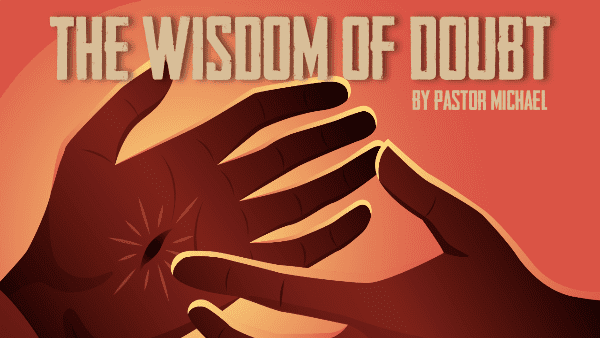
One of the reasons organized religion is failing today is its susceptibility to the “belief superiority” effect, an emerging clinical term describing people who perceive themselves as having far superior knowledge to others even though new research reveals they are typically less informed about the facts of a subject.
Belief Superiority pushes beyond Dunning-Kruger (people think they’re smarter than they are) and the cognitive dissonance with which we are all too familiar these days, into the realm of cultish groupthink exhibited by organizations such as Jim Jones’ Peoples Temple and QAnon.
All religions have fundamentalist sects who think they know everything and that the rest of us are lost or, in extreme cases, an evil that must be eradicated. We often see Belief Superiority in Evangelical Christian circles, where any suggestion there are paths to God that don’t involve Jesus as a sacrifice for human sin is met with derision, shunning, and sometimes, expulsion. The same attitude can be found in Jewish ultra-orthodox Lubavitch Hassidim and Islamic Fundamentalists. No matter our religious or spiritual persuasion, a closed mind is dangerous.
If we have come to accept everything we believe as somehow objective truth that everyone else needs to fall in line with, well, we’ve missed the entire point of the spiritual journey. Seeking a way to experience a more profound, quantum connection with every being in all dimensions is never about our way being the only way. There is no progress in thinking we have all the answers and everyone else is wrong. If we are so convicted of our beliefs that no alternatives are possible, we are essentially spiritually dead. We need doubt to prevent us from slipping into intolerance and inquisitions.
In our mass-media-controlled world, questioning everything is a necessity. Yes, we decry conspiracy theorists, and we should. There are facts, provable, found through carefully crafted, repeatable experiments. Facts help us discern the answers to our questions. But there are few facts when we’re thinking about religion, spirituality, and faith.
There are always more questions.
When we learned that atoms form matter, we asked what makes atoms? When we discovered the atomic nucleus and the electrons, protons, and neutrons therein, we didn’t take that discovery as our final answer, either. We kept digging, drilling down in true Enlightenment fashion, expecting observation and reason to reveal all the mysteries of the universe. And even though we might never find profound answers through reductionism, at least the habit prevents us from falling victim to Belief Superiority.
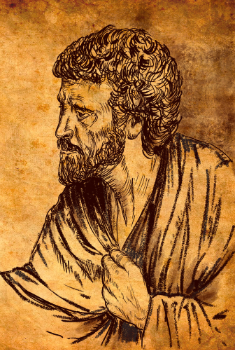
We must always ask questions. That’s why I love the apostle Thomas and think he’s a valuable role model, not an unbeliever: because he asks questions all the time. Thomas doesn’t take anything at face value. He needs to experience spirituality. His insatiable desire to know more compels Thomas to ask why the answer to a question is what anyone — even Jesus — says it is. Thomas is wise because he knows there is always more to discover. There is wisdom in doubt.
Jesus visits the disciples with Thomas eight days after the resurrection. He saw the other disciples the day before, but Thomas wasn’t home. There seems to be little reason for this other than to serve as a gematria device for the author, who wants Jesus to visit the disciples (except Thomas) seven days after the resurrection because seven represents divine completion. Jesus’ work to these disciples is done, but he has more for Thomas, who understands Jesus more deeply than the others. One of the cues indicating Thomas knows more than the others is that Jesus visits Thomas on the eighth day after the resurrection, eight representing the supernatural level of existence beyond our physical world.
In the First Testament, the number eight often references God’s metaphysical activity with and for the Jewish people in our piece of the multiverse. There are eight nights of Chanukah celebrating the miraculous victory of the Maccabees, accomplished with God’s supernatural help, and circumcision happens on a child’s eighth day of life to symbolize the Jewish people’s supernatural covenant with God.
The number eight is the author’s sly way of letting us know Jesus has something supernatural in store for Thomas:
John 20.24–29 (CEB)
Thomas, the one called Didymus, one of the Twelve, wasn’t with the disciples when Jesus came. The other disciples told him, “We’ve seen the Lord!” But he replied, “Unless I see the nail marks in his hands, put my finger in the wounds left by the nails, and put my hand into his side, I won’t believe.”After eight days his disciples were again in a house and Thomas was with them. Even though the doors were locked, Jesus entered and stood among them. He said, “Peace be with you.” Then he said to Thomas, “Put your finger here. Look at my hands. Put your hand into my side. No more disbelief. Believe!” Thomas responded to Jesus, “My Lord and my God!”
Jesus replied, “Do you believe because you see me? Happy are those who don’t see and yet believe.”
This passage is all sorts of mangled by portraying Thomas as an “unbeliever.” But Thomas has more faith than any of the other disciples because he’s not happy taking their word for anything. Thomas wants proof, not mythology, and certainly not the word of someone suffering from Belief Superiority, as the disciples seem to be exhibiting. I think Thomas’s response to Jesus’ retort, “Happy are those who don’t see and yet believe,” would have been something like, “Ignorance is not bliss, Jesus.”
Blind faith creates easily misled zealots, not spiritually and socially advanced human beings capable of turning the world’s systems upside-down.
The Bible doesn’t say where Thomas was, but I find it intriguing that the rest of the disciples are “afraid of the Jewish authorities,” hiding in a room while Thomas is out and about, still seeking. Throughout the gospels, Thomas always digs deeper than the rest, asking Jesus to clarify, sometimes even berating Jesus for speaking in riddles.
It’s not surprising Thomas wants to feel Jesus. Touching Jesus’ wounds is a profound commentary not on Thomas’ lack of belief but on his unwavering dedication to the Wisdom of Jesus. The disciples’ gossip isn’t good enough for Thomas. He has to experience Jesus for himself because he knows that’s the whole point of Jesus’ existence anyway: to show us God is a fire burning within us all. A fire no empire can ever extinguish.
We fault Thomas for “doubting,” but doubt is virtuous. Doubt is a great virtue, in fact, for it means we don’t easily fall victim to all manner of charlatanism and chicanery. If we’re serious students of religion, spirituality, awakening consciousness — anything vaguely metaphysical; if we want to consciously work to avoid a Belief Superiority complex; then we must be like Thomas and doubt — not only what we read and hear from others, but also what we tell ourselves.
JFK said, “The great enemy of the truth is very often not the lie — deliberate, contrived, and dishonest — but the myth, persistent, persuasive, and unrealistic … Belief in myths allows the comfort of opinion without the discomfort of thought.”
Thomas is a thoughtful model for all people of faith who need more than mythology. His story encourages us to find new ways to explore scripture, deeply examine what we believe, and, perhaps especially, to honestly examine what we doubt.
Amen.
Question: What are your spiritual doubts, and how will you examine them this season?